
Protein Labeling Reagents

![eMolecules Sulfo-Cy3.5 alkyne | Broadpharm |1028.310 | C41H40K3N3O13S4 | 0.000 | [K+].[K+].[K+].CN1\C(=C\C=C\C2=[N+](CCCCCC(=O)NCC#C)c3ccc4c(cc(cc4c3C2(C)C)S([O-])(=O)=O)S([O-])(=O)=O)C(C)(C)c2c1ccc1c(cc(cc21)S([O-])(=O)=O)S([O-])(=O)=O | 1mg | 761705697](https://assets.fishersci.com/TFS-Assets/CCG/product-images/502462498.JPG-250.jpg)
eMolecules Sulfo-Cy3.5 alkyne | Broadpharm |1028.310 | C41H40K3N3O13S4 | 0.000 | [K+].[K+].[K+].CN1\C(=C\C=C\C2=[N+](CCCCCC(=O)NCC#C)c3ccc4c(cc(cc4c3C2(C)C)S([O-])(=O)=O)S([O-])(=O)=O)C(C)(C)c2c1ccc1c(cc(cc21)S([O-])(=O)=O)S([O-])(=O)=O | 1mg | 761705697
Sulfo-Cy3.5 alkyne | Broadpharm |1028.310 | C41H40K3N3O13S4 | 0.000 | [K+].[K+].[K+].CN1\C(=C\C=C\C2=[N+](CCCCCC(=O)NCC#C)c3ccc4c(cc(cc4c3C2(C)C)S([O-])(=O)=O)S([O-])(=O)=O)C(C)(C)c2c1ccc1c(cc(cc21)S([O-])(=O)=O)S([O-])(=O)=O | 1mg | 761705697

C(C)(C)C=C(CS([O-])(=O)=O)c5cc4=C(c3cc2C(CS(O)(=O)=O)=CC1(C)C)c1ccc(cc1C(O)=O)C(=O)NCCCCCN | 1mg | 599128700](https://assets.fishersci.com/TFS-Assets/CCG/product-images/502468095.JPG-250.jpg)
eMolecules BP Fluor 594 Cadaverine | Broadpharm |806.950 | C40H46N4O10S2 | 90.000 | CN1c2cc3Oc4cc5=[N+](C)C(C)(C)C=C(CS([O-])(=O)=O)c5cc4=C(c3cc2C(CS(O)(=O)=O)=CC1(C)C)c1ccc(cc1C(O)=O)C(=O)NCCCCCN | 1mg | 599128700
BP Fluor 594 Cadaverine | Broadpharm |806.950 | C40H46N4O10S2 | 90.000 | CN1c2cc3Oc4cc5=[N+](C)C(C)(C)C=C(CS([O-])(=O)=O)c5cc4=C(c3cc2C(CS(O)(=O)=O)=CC1(C)C)c1ccc(cc1C(O)=O)C(=O)NCCCCCN | 1mg | 599128700
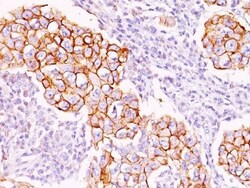
Biotium Phosphotyrosine(PY20), CF488A conjugate, 0.1mg/mL
Protein phosphorylation is a fundamental event in the regulation of a large number of intracellular processes. Phosphorylation of specific tyrosine residues is the result of activation or stimulation of their respective protein tyrosine kinases. The phosphorylated proteins can be auto-phosphorylated kinases or certain cellular protein substrates. Tyrosine-phosphorylated proteins are involved in signal transduction and in the regulation of cell proliferation. Antibody to phosphotyrosine provides an excellent tool for the detection, characterization, and purification of phosphotyrosine containing proteins. This MAb shows no cross-reaction with other phosphoamino acids and is superb for multiple applications including staining of formalin/paraffin tissues.Primary antibodies are available purified, or with a selection of fluorescent CF Dyes and other labels. CF Dyes offer exceptional brightness and photostability. Note: Conjugates of blue fluorescent dyes like CF405S and CF4

Biotium NKX2.2(NX2/294), CF568 conjugate, 0.1mg/mL
Expression of NKX2.2 has been found in neuroendocrine tumors of the gut, making it a potential marker for the study of gastrointestinal neuroendocrine tumors. More recently, NKX2.2 protein was identified as a target of EWS-FLI-1, the fusion protein specific to Ewing sarcoma, and was shown to be differentially upregulated in Ewing sarcoma on the basis of array-based gene expression analysis. It acts as a valuable marker for Ewing sarcoma, with a sensitivity of 93% and a specificity of 89%, and aids in the differential diagnosis of small round cell tumors.Primary antibodies are available purified, or with a selection of fluorescent CF Dyes and other labels. CF Dyes offer exceptional brightness and photostability. Note: Conjugates of blue fluorescent dyes like CF405S and CF405M are not recommended for detecting low abundance targets, because blue dyes have lower fluorescence and can give higher non-specific background than other dye colors.
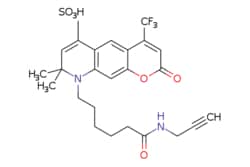
eMolecules 2006309-79-9 | BP Light 800 NHS ester | Broadpharm540.550 | C25H27F3N2O6S | 0.000 | CC1(C)C=C(CS(O)(=O)=O)c2cc3c(cc(=O)oc3cc2N1CCCCCC(=O)NCC#C)C(F)(F)F | 1mg | 599128602
BP Light 800 NHS ester | Broadpharm | 2006309-79-9540.550 | C25H27F3N2O6S | 0.000 | CC1(C)C=C(CS(O)(=O)=O)c2cc3c(cc(=O)oc3cc2N1CCCCCC(=O)NCC#C)C(F)(F)F | 1mg | 599128602
Quanterix Inc TSA PLUS CYANINE 3 SYSTEM
TSA Plus Cyanine 3 System, for 50-150 Slides. These systems are designed for direct fluorescence detection in ISH or IHC procedures.

Biotium ViaFluor 405 Live Cell Microtubule Stain, Trial Size
ViaFluor™ 405 is a blue fluorescent taxol probe with excitation/emission at 408/452 nm that allows fluorescent staining of microtubules in living cells for detection in the DAPI channel. Supplied at 1000X in DMSO, with a vial of 100 mM verapamil, which can enhance staining in some cell types.
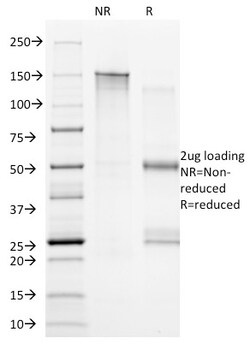
Biotium CD20(B9E9), CF488A conjugate, 0.1mg/mL
Recognizes a protein of 33-37 kDa, identified as CD20 (Workshop V; Code CD20.12). B9E9 recognizes extracellular domain of CD20. The epitope is similar to or identical to that recognized by other CD20 antibodies including Leu-16 and B1. This MAb can be used for immunophenotyping of leukemia and malignant cells, B lymphocyte detection in peripheral blood, B cell localization in tissues and B lymphocyte purification by immunosorbent methods. CD20 is a non-Ig differentiation antigen of B-cells and its expression is restricted to normal and neoplastic B-cells, being absent from all other leukocytes and tissues. CD20 is expressed by pre B-cells and persists during all stages of B-cell maturation but is lost upon terminal differentiation into plasma cells. Protein passes through the membrane 4 times with both ends in cytoplasm and exposes one short and one longer loop to the external environment. CD20 is not glycosylated in resting B cells and its cytoplasmic domains are differentia
Biotium Human Kappa Light Chain(KLC264), CF488A conjugate, 0.1mg/mL
This MAb is specific to kappa light chain of immunoglobulin and shows no cross-reaction with lambda light chain or any of the five heavy chains. In mammals, the two light chains in an antibody are always identical, with only one type of light chain, kappa or lambda. The ratio of Kappa to Lambda is 70:30. However, with the occurrence of multiple myeloma or other B-cell malignancies this ratio is disturbed. Antibody to the kappa light chain is reportedly useful in the identification of leukemias, plasmacytomas, and certain non-Hodgkin's lymphomas. Demonstration of clonality in lymphoid infiltrates indicates that the infiltrate is malignant.Primary antibodies are available purified, or with a selection of fluorescent CF Dyes and other labels. CF Dyes offer exceptional brightness and photostability. Note: Conjugates of blue fluorescent dyes like CF405S and CF405M are not recommended for detecting low abundance targets, because blue dyes have lower fluorescence and can gi

Biotium 5(6)-CARBOXYRhodamine 110-C5-Maleimide (
CR110-C5-maleimide (full name: 5(6)-Carboxyrhodamine 110-C5-maleimide) is a maleimide derivative of the green fluorescent dye carboxyrhodamine 110. The dye has spectral properties (Ex/Em (MeOH) = 502/524 nm) similar to those of fluorescein (fluorescein-5-maleimide, for example), but the photostability of the dye is among the best of all green fluorescent dyes. Thus, the dye is a superior green fluorescent dye for labeling thiols. Properties: Orange red solid soluble in DMF or DMSO; Store at -20°C and protect from light, especially in solution; C31H30N4O6; MW: 554.59.

Medchemexpress LLC Apn-PEG36-tetrazine | 1997.30 g·mol⁻1 | C94H161N7O38 | 10 MG

APN-PEG36-tetrazine is a tetrazine-functionalized polyethylene glycol (PEG36) reagent for bioorthogonal click chemistry and antibody-drug conjugate (ADC) linker development. It undergoes inverse electron-demand Diels-Alder (iEDDA) reactions with trans-cyclooctene (TCO) groups, enabling rapid conjugation in bioconjugation workflows. The reagent is supplied in small research quantities and should be stored protected from light under inert conditions.
- Tetrazine-functionalized PEG36 for iEDDA click reactions.
- Suitable for antibody-drug conjugate (ADC) linker synthesis and bioconjugation.
- Molecular weight approximately 1997.30 g·mol⁻1.
- Available in small vial sizes for research use (1 mg, 5 mg, 10 mg).
- Store at -20°C protected from light; in solvent store at -80°C for long-term stability.
![eMolecules 252255-42-8 | Sulfo-Cy5 bis-NHS ester | Broadpharm975.140 | C45H51KN4O14S2 | 0.000 | [K+].CC1(C)\C(=C/C=C/C=C/C2=[N+](CCCCCC(=O)ON3C(=O)CCC3=O)c3ccc(cc3C2(C)C)S([O-])(=O)=O)N(CCCCCC(=O)ON2C(=O)CCC2=O)c2ccc(cc12)S([O-])(=O)=O | 1mg | 761705599](https://assets.fishersci.com/TFS-Assets/CCG/product-images/502461537.JPG-250.jpg)
eMolecules 252255-42-8 | Sulfo-Cy5 bis-NHS ester | Broadpharm975.140 | C45H51KN4O14S2 | 0.000 | [K+].CC1(C)\C(=C/C=C/C=C/C2=[N+](CCCCCC(=O)ON3C(=O)CCC3=O)c3ccc(cc3C2(C)C)S([O-])(=O)=O)N(CCCCCC(=O)ON2C(=O)CCC2=O)c2ccc(cc12)S([O-])(=O)=O | 1mg | 761705599
Sulfo-Cy5 bis-NHS ester | Broadpharm | 252255-42-8975.140 | C45H51KN4O14S2 | 0.000 | [K+].CC1(C)\C(=C/C=C/C=C/C2=[N+](CCCCCC(=O)ON3C(=O)CCC3=O)c3ccc(cc3C2(C)C)S([O-])(=O)=O)N(CCCCCC(=O)ON2C(=O)CCC2=O)c2ccc(cc12)S([O-])(=O)=O | 1mg | 761705599
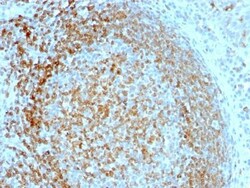
Biotium CD74(LN-2), CF488A conjugate, 0.1mg/mL
This antibody recognizes a protein of ~35 kDa, identified as CD74 (Workshop IV). CD74 is a type II transmembrane protein which binds to the peptide binding groove of newly synthesized MHC class II alpha/beta heterodimers and prevents their premature association with endogenous polypeptides. CD74 is expressed primarily by antigen presenting cells, such as B-lymphocytes (from before the pre-B cell stage to before the plasma cell stage), macrophages, and monocytes, and many epithelial cells. Anti-CD74 stains predominantly germinal center lymphocytes and B-cell lymphomas, but rarely T-cell lymphomas. Anti-CD74 has been shown to be useful in differentiating atypical fibroxanthoma (-) from malignant fibrous histiocytoma ( ).Primary antibodies are available purified, or with a selection of fluorescent CF Dyes and other labels. CF Dyes offer exceptional brightness and photostability. Note: Conjugates of blue fluorescent dyes like CF405S and CF405M are not recommended for detecti
Biotium PLGF(PLGF94), CF568 conjugate, 0.1mg/mL
The onset of angiogenesis is believed to be an early event in tumorigenesis and may facilitate tumor progression and metastasis. Several growth factors with angiogenic activity have been described. These include Fibroblast Growth Factor (FGF), Platelet Derived Growth Factor (PDGF), Vascular Endothelial Growth Factor (VEGF) and Placenta Growth Factor (PLGF). Placenta growth factor (PLGF) is a secreted protein primarily produced by placental trophoblasts but also expressed in other endothelial cells and tumors. There are three isoforms, PLGF-1, PLGF-2, and PLGF-3. PLGF-2 is expressed up until week 8 in the placenta; the placental tissues continuously express PLGF-1 and PLGF-3 but only PLGF-1 is found in colon and mammary carcinomas. PLGF acts to stimulate angiogenesis, endothelial growth and migration. PLGF is a powerful promoter of tumor growth and is upregulated in some cancers, and PLGF is thought to aid in atherosclerotic lesions and neovascular growth surrounding the lesio
AdipoGen Fluorescein didecanoate
Chemical. CAS 7389-09-5. Formula C40H48O7. MW 640.8. Fluorescein didecanoate is a non-fluorescent hydrophobic fluorescein derivative that can pass through the cell membrane whereupon intracellular esterases hydrolyze the didecanoate group producing the highly fluorescent product fluorescein. The fluorescein molecules accumulate in cells. Fluorescein didecanoate is a fluorogenic substrate for C10 esterase that generates green fluorescence upon esterase cleavage. Spectral Data lambdaEx 497nM, lambdaEm 516nm. Extinction coefficient 80000 cm-1 M-1.